
Nepal
We have several options available for Nepal so scroll down to see all that is on offer!
There are traditionally two main seasons in Nepal: Spring, which is March, April, May, and Autumn: mid/late September through to the end of November. However, travel is also good during the shoulder months of December, January & February. Yes, it will be colder in the mountains, but generally (climate change permitting) the weather is good with clear skies and the added advantage of it being quieter.
We do not recommend travelling during the monsoon season due to weather disruption for both flights and road travel. Also during the monsoon you are unable to travel inside the national park in Chitwan due to flooding.
Nepal:
Mardi Himal Trek
Nepal:
Gokyo Lake & Gokyo Ri
Nepal:
Discover Nepal
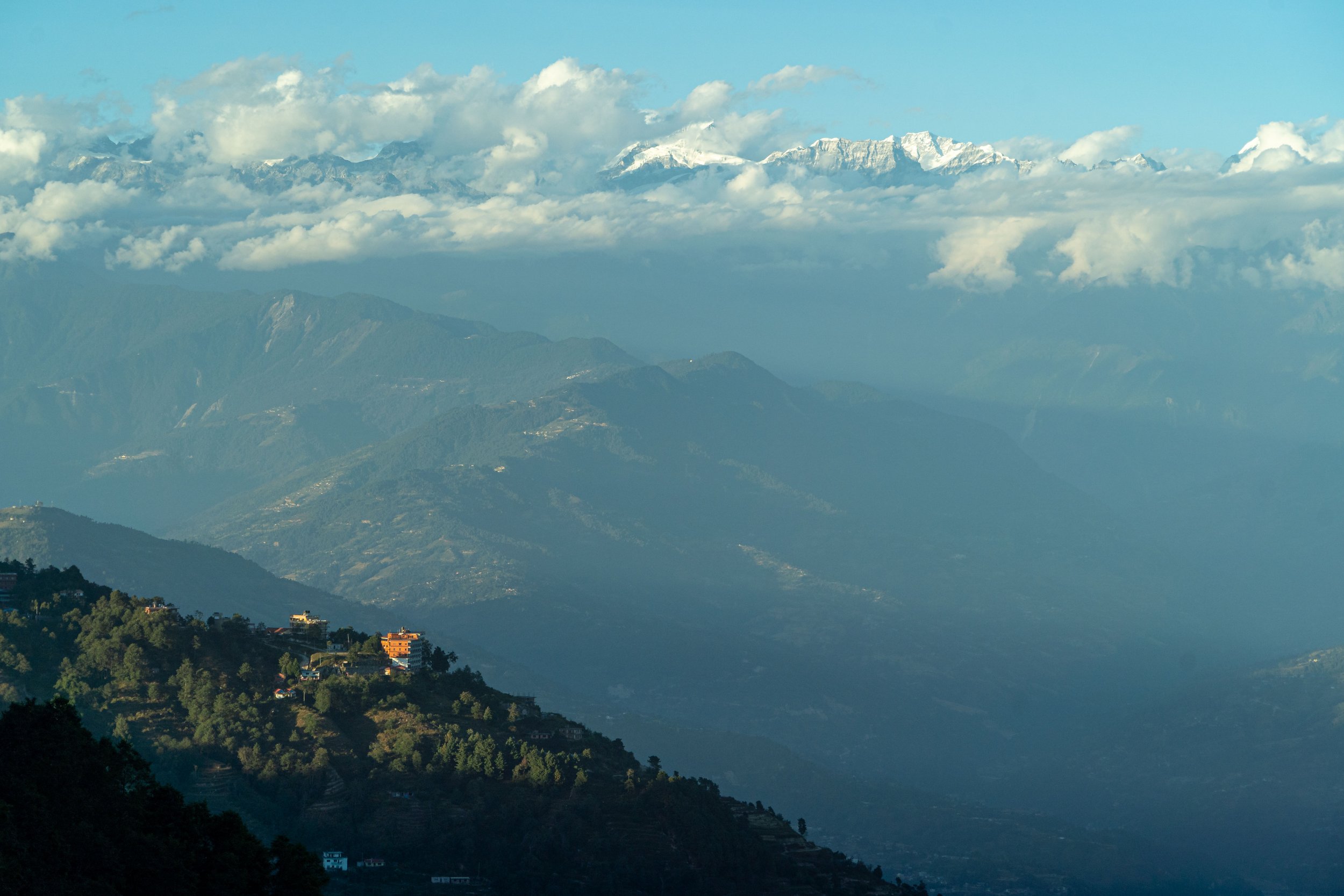
This 14 day full supported teahouse trek is a wonderful introduction to the mountains of Nepal. It is a stunningly beautiful trek, taking you up through ancient rhododendron forests, to what feels like the face of the mountains themselves, as you get up close and personal with Annapurna South, Hinchuli, Machhapuchhre, Gangapurna, Annapurna I and Mardi Himal.
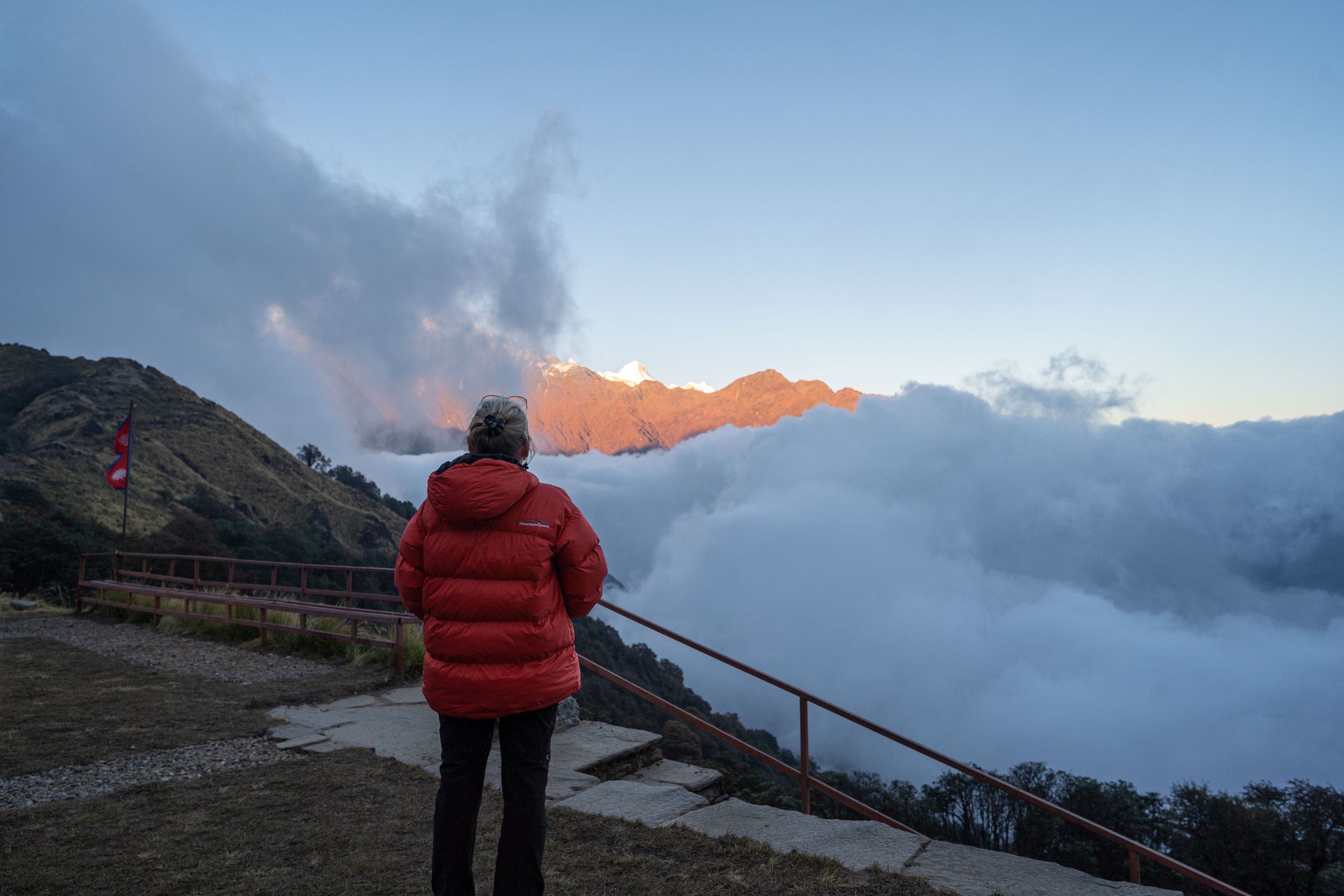
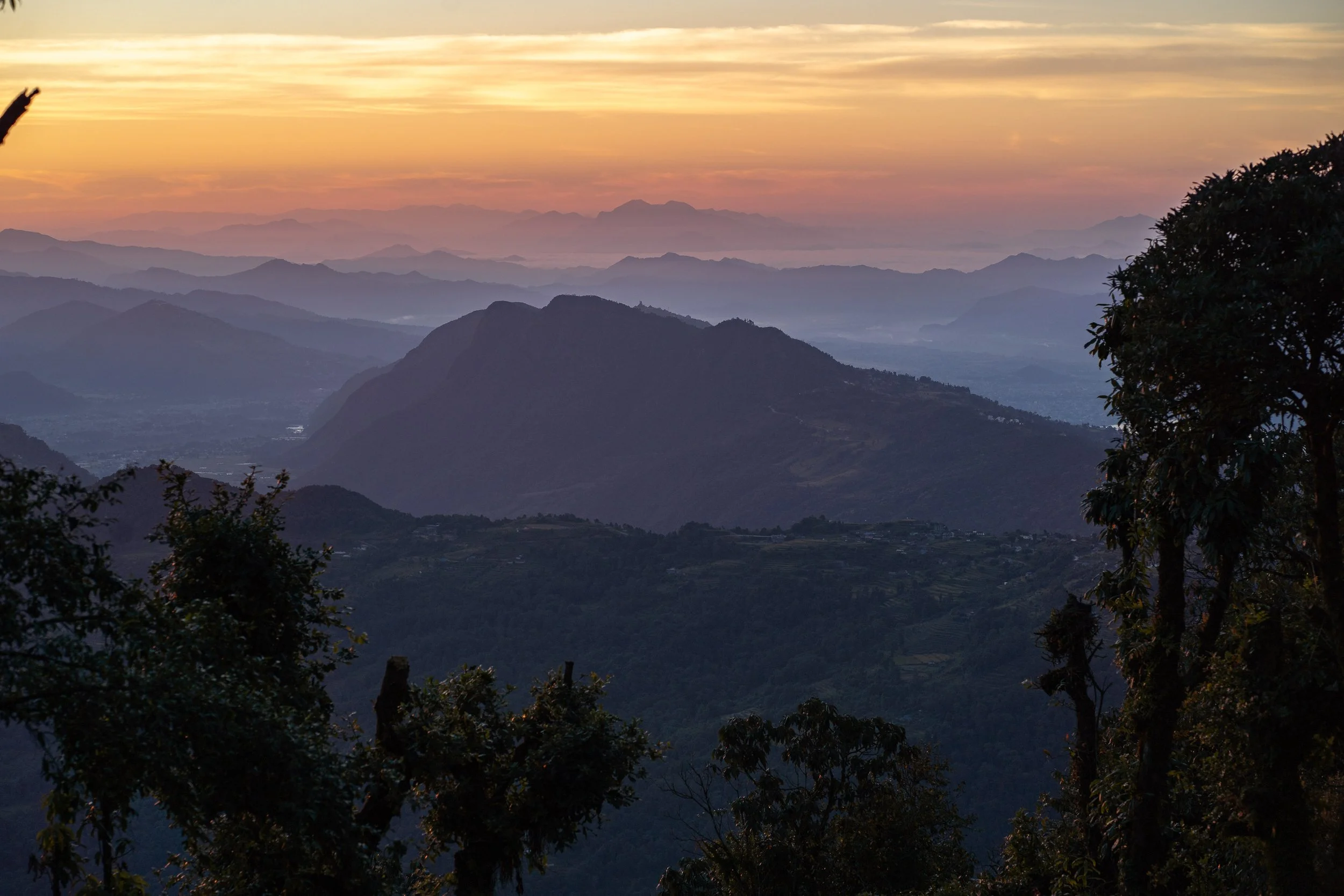
Situated just east of the Annapurna Base Camp trek, the Mardi Himal trek is a hidden gem. The trail winds along small paths through ancient rhododendron forests, until you climb out onto a high moorland at around 3,300m. Here, the landscape changes quite abruptly with amazing views of Mardi Himal, Machhapuchhre, Annapurna South and Hiunchuli. From High Camp (3,580m) we rise early and walk to an amazing viewpoint for a spectacular sunrise.
Trek difficulty: Easy/Moderate
Day 1 (D)
Arrival, informal welcome dinner
Arrive at Tribhuvan International Airport, Kathmandu where you will be met by a member of our team for your transfer to your hotel. Settle in, relax, and join us later for an informal dinner.
Day 2 (B)
Tour briefing & walk through Asan Bazaar, & visit UNESCO World Heritage Sites, Kathmandu Durbar Square & Swayambhunath Stupa
Today we will start the day with a full briefing about the tour. After any last-minute shopping and a lunch, we will stretch our legs as we walk through Thamel, the tourist area of Kathmandu and on through Asan Bazaar, then Kathmandu Durbar Square before heading to Swayambhunath Stupa to walk a kora with local pilgrims as they perform their early evening prayers.
Asan is the historical, cultural, and commercial centre of Kathmandu and where you are able to experience the real everyday life of Kathmanduites as they shop and go about their daily lives. This ancient bazaar has a myriad of alleyways interspersed with temples and monasteries and is the heart of the Kathmandu Newar community. The bustling, narrow streets are filled with tiny shops selling everything from spices, to kitchenware, hardware, plants, seeds, clothes, vegetables, meat, dried beans, fish, homemade pickle, delicious snacks, festival essentials and much, much more. A wander through these ancient streets is always a feast for the eyes and senses. We will arrive in Kathmandu Durbar Square, a dense cluster of old palaces, courtyards and beautifully carved temples that once hosted royal ceremonies and daily life in the old kingdom. Hanuman Dhoka Palace, the Kumari Ghar and a mix of pagoda-style shrines keep the square buzzing with heritage, worship and movement.
Swayambhunath or the Monkey Temple, is one of Nepal’s most iconic and easily recognised temples with its fluttering prayer flags and unforgettable eyes of wisdom painted high on the central stupa. Sat majestically on top of a hill to the west of the city, this ancient and beautiful Buddhist temple sees a constant stream of locals and pilgrims walking in a clockwise kora and climbing the steps to worship at the many shrines surrounding the great stupa. From its hilltop location, Swayambhunath also offers some of the finest views across Kathmandu and the valley.
Day 3 (B)
Fly to Pokhara, Phewa Lake & the Peace Pagoda
This morning we take an early morning flight to Pokhara. After settling in at our hotel, we’ll take a boat across Phewa Lake and make a steady uphill walk to the Peace Pagoda. If the skies are clear, the entire Annapurna Range stretches out before you; an unforgettable first glimpse of the mountains you’ll soon trek among.
The rest of the day is yours to explore. Pokhara’s lakeside scene is famously relaxed, filled with cafés, yoga studios, adventure sports and peaceful walking routes.
Day 4 (B L D)
Trek Kande - Pitam Deurali (6 km, c.3-4 hours, 2,100m)
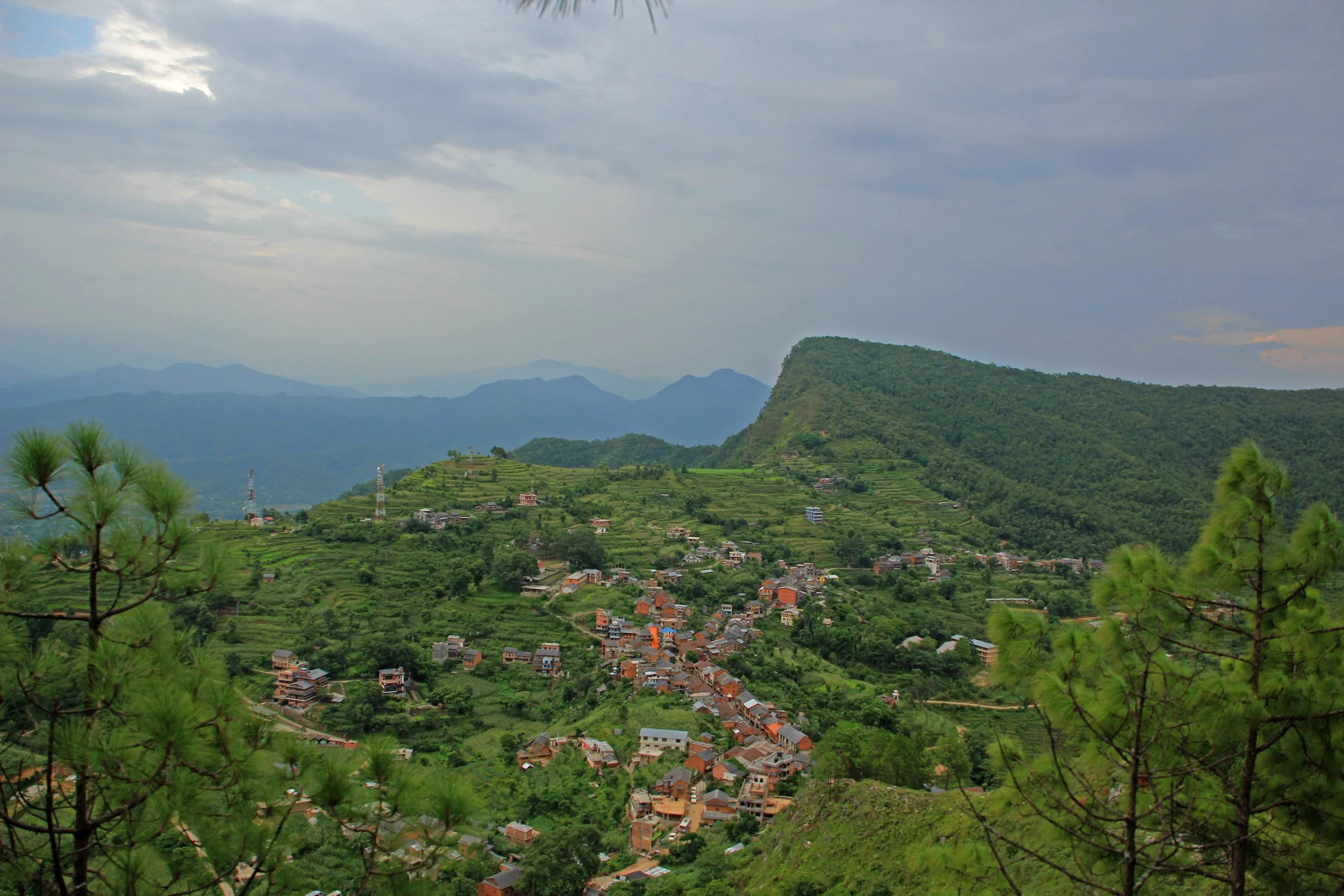
After an early breakfast we will drive to the trail head at Khande (approx. 45 mins) where we will meet our porter team. Once loaded up and organised we will begin our trek with a steep climb through the jungle, passing local villages until we reach Australian Camp, our lunch stop. If the weather is clear, we will be able to see magnificent views of the Annapurna Mountain range while we eat our lunch. A gentle incline after lunch brings us to Pitam Deurali and our teahouse where we will stay for the night. We will hold a quick briefing before dinner to outline tomorrow’s plan, answer any questions and of course, check that everyone is happy and enjoying themselves.
Day 5 (B L D)
Trek Pitam Deurali - Forest Camp (8.3 km, c.4-5 hours 2,520m)
After a hearty breakfast we will head on up to our next stop, Forest Camp. It’s uphill for most of the day taking us through thick jungle with beautiful views of the Dhaulagiri and Annapurna ranges. We will take it slowly and steadily, ensuring there is time to take in the magic of where we are, and if we are lucky, we may catch glimpses of some of the region’s abundant wildlife, such as deer, monkeys and the many species of birds that all live in this dense jungle. We reach Forest Camp and our teahouse for the night in the afternoon. As for every evening during the tour, before dinner we will hold a check-in and briefing session.
Day 6 (B L D)
Trek Forest Camp - Badal Dada (5.1 km, c.4-5 hours, 3,210 m)
Today is a short distance but a steep climb through an ancient rhododendron and juniper forest. As you reach the top, your hard work will be rewarded with the most breath-taking views of Machhapuchhre (Fishtail Mountain). We should arrive at our teahouse in time for lunch, and you can spend the afternoon as you wish – taking in the view, exploring the local vicinity, snoozing in the afternoon sun with a book, or hanging out with the group playing cards – the choice is yours. Prior to dinner there will be the next day briefing and check-in.
Day 7 (B L D)
Trek Badal Dada - High Camp (2.8 km, c.3 hours, 3,900m)
Another short day today across more gentle terrain, a lovely respite for those with achy legs. Along the way, weather permitting, we will have good views of Annapurna South, Hiunchuli, Gangapurna, Tare Kang and Khangsar to the north as we begin to get properly up close and personal with these majestic mountains. We will get to High Camp for lunch, and you will have the afternoon to rest up and prepare yourself for a super early start the next morning. Today it will be early dinner and bed after your daily briefing.
Day 8 (B L D)
Trek High Camp - View Point - High Camp (3.8 km, c.4.5 hours round trip, 4,200m)
Today will start with an early wakeup call so you can appreciate the most spectacular sunrise view over the mighty Himalayas. After a quick hot drink, we start the climb to the view point by torchlight in the dark, with the aim of arriving at the highest elevation on this trek, 4,200m in time to witness sunrise over the peak of Mardi Himal. Today, if the weather is clear you will get to see up close Annapurna I (8,091m), Annapurna South, Hiunchuli, Gangapurna, Tare Kang, Khangsar, Annapurna III and Fish Tail. Once the sun is up, we will head back down to our teahouse to warm up, eat breakfast, compare photos and spend the rest of the day getting ready for the big descent on what will be our last full day.
Day 9 (B L D)
Trek High Camp - Siding Village (8.2 km, c.5-7 hours, 1,850m)
What goes up, must come down and today is the day we make the long, steep descent back to lower elevation. After breakfast, we will retrace our steps back down to Low Camp for lunch and then head southeast from the ridge through the dense forest towards the Mardi Khola and Siding, our final stop on the trek. Trekking poles are a must for today to help your knees stay healthy and maintain your balance on the path down. Once we reach Siding it’s time to celebrate our achievement and our amazing crew
Day 10 (B)
Drive Siding village to Pokhara (c.2-3 hours)
Today we will travel by jeep back to Pokhara and the comforts of a hot shower, comfy bed and some clean clothes. We will be back in Pokhara in time for lunch and you will have free time to explore, go paragliding, have a massage, spend time on the lake, shop, or just cruise your way through the many restaurants and bars that offer up a huge range of different cuisines.
Day 11 (B L D)
Private transfer to Chitwan National Park (159 km, c.5-6hrs) & jungle safari activities
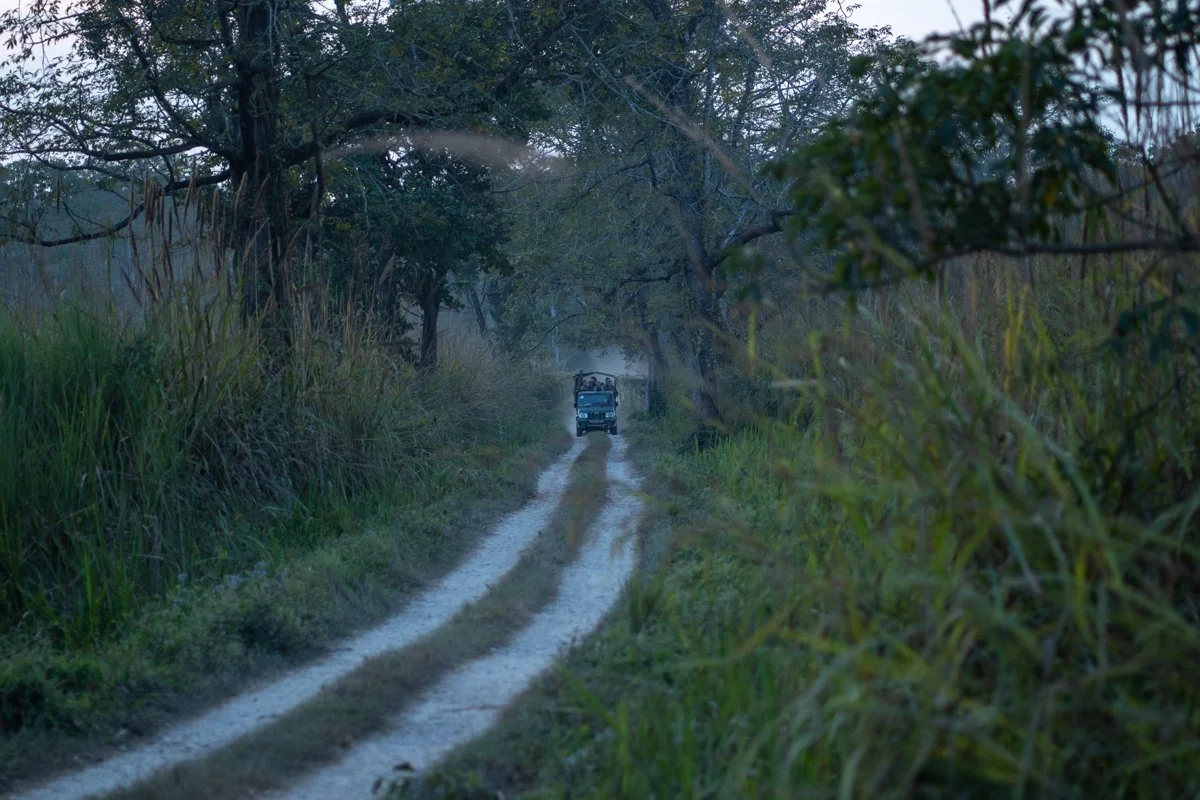
As with all travel days, it’s another early start as we head to the south of the country and the lush jungles of Chitwan National Park via private vehicle. We aim to arrive in Chitwan in time for lunch, and once settled in and fed, we will begin our jungle safari activities such as a jeep safari, canoe ride, bird watching, jungle walk, sunrise walk with elephants and cultural show. Chitwan is Nepal’s first and most famous national park and it is situated in the lowlands of the Inner Terai. It was declared a national park in 1973 and in 1984, UNESCO designated it a Natural World Heritage Site. Covering an area of 932 sq km., the park includes hilly areas of the Siwalik Range covered by deciduous Sal forest and the floodplains of the Narayani, Rapti, and the Reu Rivers, which are covered by dense tall elephant grass, interspersed with riverine forests of Silk Cotton (Kapok), Acacia and Sisam trees. The park offers protection to 56 species of mammals including the one-horned rhinoceros, Bengal tiger, Gharial crocodile, leopard, sloth bear, wild elephant, striped hyena, Gangetic dolphin and wild bison. There are estimated to be 470 species of mammals, over 500 species of birds, 126 species of fish, 150 species of butterflies and 47 species of reptiles in the park. If we are lucky, we should at least see some rhino, crocodiles, deer, monkeys and many of the national park’s bird and butterfly life.
Please note: Himalayan Quests does not support riding elephants for pleasure and works with a lodge who rescues elderly & disabled elephants and provides a chain free, safe and dignified retirement for them.
Day 12 (B L D)
Jungle safari activities
Today we will continue with our jungle safari activities getting deeper into the jungle and hopefully closer to Nepal’s amazing wildlife.
Day 13 (B)
Flight to Kathmandu & UNESCO World Heritage Sites: Pashupatinath & Boudhanath
After breakfast we will bid farewell to Chitwan and its warmer climate as we transfer to Bharatpur airport for our short 25-minutes flight back to Kathmandu. If we are lucky, we will be blessed with amazing views of the whole of the Annapurna range from the left-hand side of the plane and a bird’s eye view of the many terraces and villages that make up rural Nepal. Upon arrival back at our hotel, you will have time to settle in and make your own plans for lunch. After lunch we will head to the north east of the city for a guided tour of UNESCO World Heritage sites, Pashupatinath and Boudhanath.
Pashupatinath is not only Nepal’s most important Hindu temple but also one of the most important Shiva temples on the Indian subcontinent. It is also Kathmandu’s most important cremation site, with burning ghats lining the river bank alongside the temple.
Boudhanath is one of the most important religious and cultural centre for Nepal’s considerable Tibetan in exile population and is one of the largest Buddhist Stupas in the world. The side streets surrounding the magnificent stupa are full of maroon-robed monks, gleaming monastery roofs, stalls selling yak butter lamps, shops selling the everyday paraphernalia of Buddhist worship and the low chant of monks at prayer.
Day 14 (B)
Depart Nepal
Transfer to Tribhuvan International Airport for your onward journey.
Tour Cost: $3,635 twin share (prices subject to change)
Tour Includes:
Pre-trip advice and briefing
Airport transfers for international & domestic flights
Domestic flight tickets Kathmandu - Pokhara & Bharatpur - Kathmandu
All in country transportation in private vehicles
3 nights B&B hotel accommodation in KTM at Hotel Nomad or similar
2 nights B&B hotel accommodation in Pokhara at Hotel Karuna or similar
2 nights full board hotel accommodation in Chitwan at Hotel Sapana Village Lodge or similar
6 nights full board accommodation in tea houses during the trek
Meals as outlined in the itinerary B:13, L:8, D:9
Guided tours of Kathmandu Durbar Square, Swayambhunath, Pashupatinath Temple,
Boudhanath Stupa
Necessary permits and entrance fees.
Duffle bags for your trekking gear for the duration of the trek
Insurance for staff
Group medical kit
Government taxes
Tour does not include:
International flights to and from Kathmandu
Visas for Nepal (available on arrival)
Insurance (insurance to include evacuation is mandatory to a maximum elevation of 4,200m View Point)
Meals unless specified in the itinerary
Personal expenses to include, but not limited to beverages, alcoholic drinks, gifts,
laundry, snacks throughout the trip. Hot showers and battery charging during the trek
Sightseeing unless specified in the itinerary
Excess luggage fee for domestic flights
Tips
Charges incurred as a result of delays beyond the control of the Operator
This 15 day fully supported trek takes you from the lively streets of Kathmandu to the serene beauty of the Gokyo valley, nestled in the heart of the Khumbu region. Following trails used by Sherpa communities for centuries, you will pass through traditional villages, cross high suspension bridges, and witness some of the most spectacular Himalayan scenery in Nepal. The trek culminates at the summit of Gokyo Ri (5360m), offering panoramic views of Cho Oyu, Everest, Lhotse and Makalu, before returning to Lukla and flying back to Kathmandu.
Trek Difficulty: Moderate/Strenuous
Day 1 (D)
Arrival, informal welcome dinner
Arrive at Tribhuvan International Airport, Kathmandu, where a member of our team will meet you and transfer you to your hotel. After settling in, the rest of the day is at leisure to relax, recover from your journey, and prepare for the trek ahead. Join us later for an informal dinner. Overnight will be in Kathmandu.
Day 2 (B)
Orientation, UNESCO World Heritage Sites: Boudhanath Stupa & Pashupatinath
Your morning begins with a relaxed orientation session; expectations, flow, logistics and an introduction to the themes that will guide the coming days. By midday, you’ll step into Boudhanath, one of the largest Buddhist stupas in the world. The atmosphere here is like entering a different reality; prayer wheels turning, monks chanting, pilgrims circling in an unbroken rhythm of devotion.
We continue on to Pashupatinath, Nepal’s most sacred Hindu temple complex. From the riverbanks you’ll witness the ritualistic cremation, evening prayers and deep cultural significance of this place; a living, breathing centre of Nepali spiritual life.
Day 3 (B L D)
Fly to Lukla (2,886m) and trek to Phakding (8km, 2,640m, c.3-4 hours)
It will be a very early start as you head to Manthali Airport in the early hours of the morning (c.4-5 hr drive) in readiness for your flight to Lukla, the gateway to the Everest region. Your trek to Phakding starts directly from the airport and will take three to four hours. You will trek along a pleasant trail gently descending to the river, with a steep climb from Tarhe Khola where you have a superb view of the Kusum-Kangru (6,369m). After another short climb, you reach Ghat village and after another 1 ½ hrs of trekking you arrive at Phakding village.
Please note: Direct flights between Kathmandu and Lukla may be available depending on the season, weather conditions and airport traffic. During peak periods, flights are often routed through Manthali Airport to avoid heavy congestion and long delays at Kathmandu Airport. This routing ensures smoother operations and reduces the risk of extended wait times for travellers.
Day 4 (B L D)
Trek Phakding – Namche Bazaar (10-12km, 3,440m, c.5-6 hours)
After crossing a suspension bridge over the Dudh Kosi River, the walk is pleasant with a few short uphill climbs and some downhill, with magnificent views of Thamserku (6,808m). From the village of Benkar, you will cross a long suspension bridge over the Dudh Koshi River once more, and then continue on this trail of trekkers, dzo (mix of yak and cow) and porters, before finally arriving at the small village of Monjo. Monjo is situated below the magnificent peak of Thamserku and near to the entrance to the Sagarmatha National Park. After a few minutes’ walk from Monjo, you will enter the Sagarmatha National Park, where your trekking permit is checked. From here there is a short descent to Jorsalle village, the last village before Namche Bazaar. You will continue to trek by the river until the last bridge over the Imja is reached. From here the walk is along a winding uphill path all the way to Namche Bazaar, with views of Kwangde Peak and its sister peaks to the east, with Kusum Kangru behind you as you climb higher. There are also views of the Mt. Everest, Nuptse Wall, Lhotse and a closer view of Taweche Peak, which can be seen all the way up to Thop Danda, where there’s a resting stonewall for porters and trekkers alike. From here, there is still another 1-2 hour walk, which brings you to the famed Namche Bazaar, with its colourful houses situated in an amphitheatre shaped bowl. Namche Bazaar is the main trading village in the Khumbu region and holds a busy Saturday market. It is also a meeting place for Hindu traders from the lowlands and the Tibetan yak caravans that have reached the town by crossing the glaciated Nangpa La.
Day 5 (B L D)
Acclimatisation hike to the Everest View Hotel
Namche is tucked away between two ridges amidst the giant peaks of the Khumbu and has an abundance of lodges, tea shops and souvenir shops, as well as a magnificent outlook. It is an ideal place to spend a rest day for acclimatisation to the high altitude before heading off towards Tengboche. As part of your acclimatisation process, you will undertake a morning hike, in order to follow the rule of walk high, sleep low. You will head to Syangboche (3,800m) where the Everest View Hotel is situated offering (subject to weather) outstanding views of Everest, Nuptse, Lhotse, Ama Dablam, Thamserku and Kusum Kangaru. From here you return to Namche for lunch and you are at leisure to spend the afternoon as you wish. For those of you with sufficient energy, you may wish to undertake the short, uphill walk to the Sagarmatha National Park headquarters, a magnificent spot perched on top of Namche Bazaar with spectacular views of the surrounding snow-capped giants and the valleys way down below. There is also an interesting museum with all kinds of information regarding the history of the Himalayas, its geography, culture, mountaineering history and information on flora and fauna of this region.
Day 6 (B L D)
Trek Namche Bazaar – Phortse (6km, 3,810m, c.5 hours)
Today, you’ll leave Namche Bazaar and descend gently through alpine forests, crossing small rivers along the way. The trail opens up to dramatic views of Thamserku and Ama Dablam, giving plenty of opportunities to stop and take in the scenery. You’ll pass through traditional Sherpa villages, noticing the colourful prayer flags and small monasteries that dot the landscape. After around five hours of trekking, we’ll arrive in Phortse, a charming Sherpa village which has the highest number of Mt. Everest climbers in the world. Here, you can explore the local monasteries, interact with villagers, and enjoy a warm meal before settling in for the night at a cozy teahouse.
Day 7 (B L D)
Trek Phortse – Thare (4,300m, c.4–5 hours)
Today, you’ll leave Phortse and follow a moderate ascent through terraced fields and open valleys, with spectacular Himalayan peaks visible throughout the trek. The route is scenic and offers good possibility of wildlife viewing. The trail passes through grazing areas and scattered hamlets, giving you a sense of daily life in this remote region. Along the way, you may see herds of yaks and the colourful prayer flags fluttering above small shrines and mani walls. After four to five hours of trekking, we’ll reach Thare, a small, peaceful scenic area where the quiet of the mountains is deeply felt. Here, you can relax at your teahouse, enjoy the views, and prepare for the next stage of our journey.
Day 8 (B L D)
Trek Thare – Gokyo (4,790m, c.6–7 hours)
Today, you’ll leave Thare and trek through high alpine pastures, crossing glacial moraines and yak grazing areas along the way. The trail gradually ascends, offering spectacular views of surrounding snow-capped peaks and the vast Khumbu landscape. After six to seven hours of trekking, we’ll arrive in Gokyo, a picturesque place nestled beside the turquoise Gokyo Lakes. Here, you’ll have time to explore the lakes, take in the breathtaking scenery, and enjoy the peaceful atmosphere of one of the most scenic settlements in the Himalayas. Overnight will be in Gokyo.
Day 9 (B L D)
Gokyo Ri (5,357m) excursion & rest day
Today is the big day where you’ll wake up early to climb Gokyo Ri (5,360m), where the effort is rewarded with absolutely spectacular, almost surreal 360° sunrise views of the Himalayas. From the summit, you can take in the majestic peaks of Cho Oyu, Everest, Lhotse, and Makalu rising dramatically above the clouds, while the turquoise Gokyo Lakes sparkle like jewels far below. The panorama stretches endlessly, with glacial valleys, snow-capped ridges, and pristine high-altitude wilderness surrounding you; it’s a scene that feels otherworldly. After soaking in these unforgettable views, you’ll descend to Gokyo village for a well-deserved rest. The afternoon is free to explore the tranquil lakes, stroll around the village, or simply sit back and enjoy the serene beauty of this magical Himalayan settlement. Overnight will be in Gokyo.
Day 10 (B L D)
Trek Gokyo – Dole (9.5km, 4,200m, c.5–6 hours)
Today, you’ll leave Gokyo and begin a gentle descent through open valleys and high-altitude pastures, surrounded by breathtaking Himalayan scenery. The trail offers sweeping views of snow-capped peaks, glacial streams, and yak herds grazing peacefully, giving a sense of the serene, untouched beauty of this region. After five to six hours of walking, we’ll arrive in Dole, a small and tranquil settlement, perfect for resting and recharging after a rewarding day of trekking. Here, you can relax at your teahouse, enjoy the crisp mountain air, and take in the peaceful surroundings.
Day 11 (B L D)
Trek Dole – Monjo (14km, 2,835m, c.7–8 hours)
Today, you’ll start a long but scenic descent from Dole, winding through forests of rhododendron, pine and birch, with occasional glimpses of snow-capped peaks in the distance. Along the way, you’ll cross suspension bridges spanning glacial streams, and pass through small villages that give a glimpse of local life in the Khumbu region. We’ll stop in Namche Bazaar for lunch, soaking in the vibrant market atmosphere before continuing our trek. The trail gradually descends back toward Monjo, our home for the night.
Day 12 (B L D)
Trek Monjo – Lukla (13km, 2,886m, c.4–5 hours)
Today, you’ll retrace your steps along the trail back to Lukla, descending through forests, crossing familiar suspension bridges, and passing the villages that have been part of your journey. As you approach Lukla, the sense of accomplishment and awe over the landscapes you’ve traversed will be unforgettable. Once in Lukla, you can celebrate completing the trek with a hot shower and some well-deserved refreshments. Overnight will be in Lukla, before your return to Kathmandu.
Day 13 (B)
Fly to Manthali (15-20 mins) and drive to Kathmandu (1,400m, c.4-5 hours)
This morning you’ll fly back to Manthali and then by road, onto Kathmandu. You should arrive in the early afternoon, after which the rest of the day is at your leisure. You can relax at your hotel, explore the city, or enjoy some optional shopping or sightseeing in Kathmandu.
Please note: Direct flights between Kathmandu and Lukla may be available depending on the season, weather conditions and airport traffic. During peak periods, flights are often routed through Manthali Airport to avoid heavy congestion and long delays at Kathmandu Airport. This routing ensures smoother operations and reduces the risk of extended wait times for travellers.
Day 14
Rest Day (B)
This is your reset day. Feel free to do as little or as much as you want. There are plenty of UNESCO World Heritage sites to explore, shops to browse in, cafe’s to chill out and drink coffee in and spas in which to have a relaxing massage.
Day 15
Departure from Nepal (B)
Transfer to Tribhuvan International Airport for your onward journey.
Tour Cost: $3,835 twin share (prices subject to change)
Tour Includes:
Pre-trip advice and briefing
Airport transfers for international & domestic flights
Domestic flight ticket Kathmandu - Pokhara & Bharatpur - Kathmandu
All in country transportation in private vehicles
4 nights B&B hotel accommodation in KTM at Hotel Nomad or similar
10 nights full board accommodation in tea houses during the trek
Meals as outlined in the intinerary B:13, L:10, D:11
Guided tours in Boudhanath Stupa and Pashupatinath Temple
Duffle bags for your trekking gear for the duration of the trek
Necessary permits and entrance fees
Insurance for our staff
Group medical kit
Government taxes
Tour does not include:
International flights to and from Kathmandu
Visas for Nepal (available on arrival)
Insurance (insurance to include evacuation is mandatory to a maximum elevation of 5,357m, Gokyo Ri)
Meals unless specified in the itinerary
Personal expenses to include, but not limited to beverages, alcoholic drinks, gifts, laundry,
snacks throughout the trip. Hot showers and battery charging during the trek
Sightseeing unless specified in the itinerary
Excess luggage fee for domestic flights
Tips
Charges incurred as a result of delays beyond the control of the operator
Embark on a 10 day journey that weaves together the energy of Kathmandu, the artistry of ancient cities, and the serenity of Nepal’s countryside. From throwing clay in Bhaktapur to watching the sunrise over the Annapurna Massif; from visiting sacred stupas to staying with welcoming village families, every day is rich with culture, colour, and connection. Along the way, you’ll meet inspiring local artisans, witness breathtaking Himalayan vistas, and discover a side of Nepal that stays with you long after you leave.
Trip Style: Slow travel, meaningful connection.
Day 1 (D)
Arrival informal welcome dinner
Arrive at Tribhuvan International Airport, Kathmandu, where you’ll be met by a member of our team and transferred to your hotel. Once checked in, the rest of the day is for decompressing. Kathmandu’s energy hits you instantly; incense drifting through the streets, small shrines tucked between alleyways, the distant hum of temple bells and of course, the busy traffic; but tonight, you keep it simple: rest, recharge, settle in, relax and come together for an informal dinner at a local restaurant.
Day 2 (B)
Orientation, UNESCO World Heritage Sites: Boudhanath Stupa & Pashupatinath
Your morning begins with a relaxed orientation session; expectations, flow, logistics and an introduction to the themes that will guide the coming days.
By midday, you’ll step into Boudhanath, one of the largest Buddhist stupas in the world. The atmosphere here is like entering a different reality; prayer wheels turning, monks chanting, pilgrims circling in an unbroken rhythm of devotion.
We continue on to Pashupatinath, Nepal’s most sacred Hindu temple complex. From the riverbanks you’ll witness the ritualistic cremation, evening prayers and deep cultural significance of this place; a living, breathing centre of Nepali spiritual life.
Day 3 (B L)
Pottery Square in Bhaktapur
Today is all about slowing down and tapping into Nepal’s deep craft traditions. After breakfast, we’ll head east to Bhaktapur, the City of Devotees, known for its beautifully preserved squares, lived-in heritage, and the kind of artistry that feels timeless.
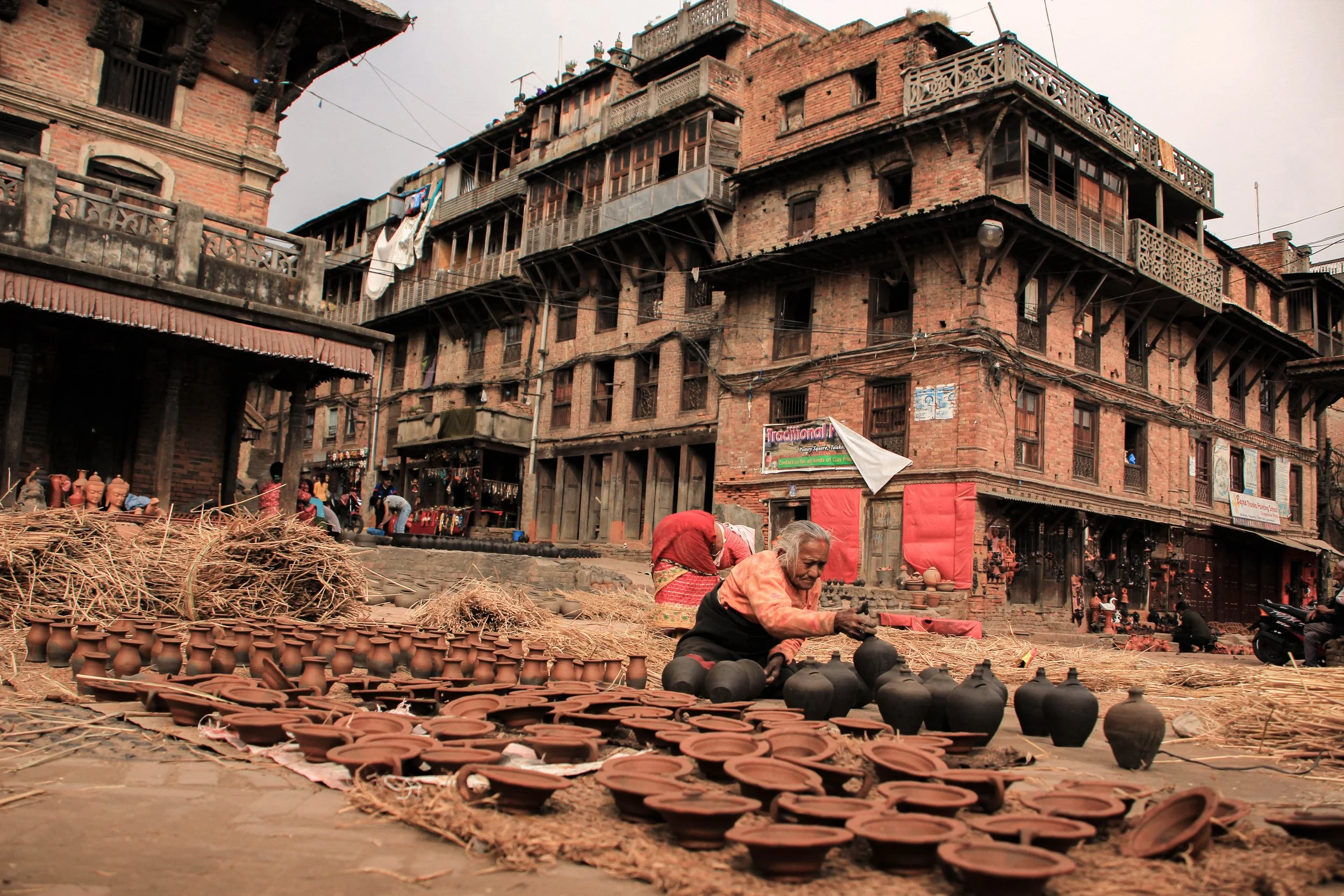
Explore the city’s ancient squares, narrow alleys, and colourful temples before stepping into the Pottery Square, where generations of Newar potters have shaped clay into everyday objects, ritual items, and artworks. You’ll step right into the heart of it; learning the techniques that local potters have refined over hundreds of years. The rhythm of the wheel, the earthy smell of wet clay, and the buzz of craftsmen working around you all create this grounded, almost meditative experience. Somewhere in the middle of it all, we’ll pause and have Newari lunch together at a local spot.
Day 4 (B D)
Patan tour & talk with artisans and experts, cooking class
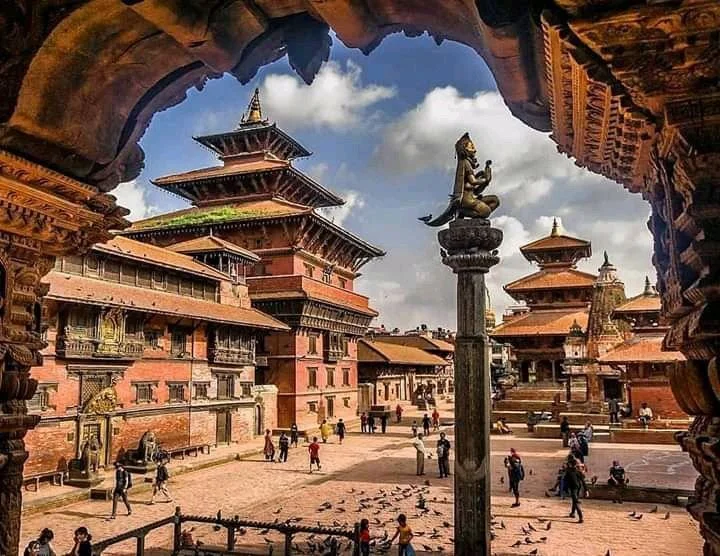
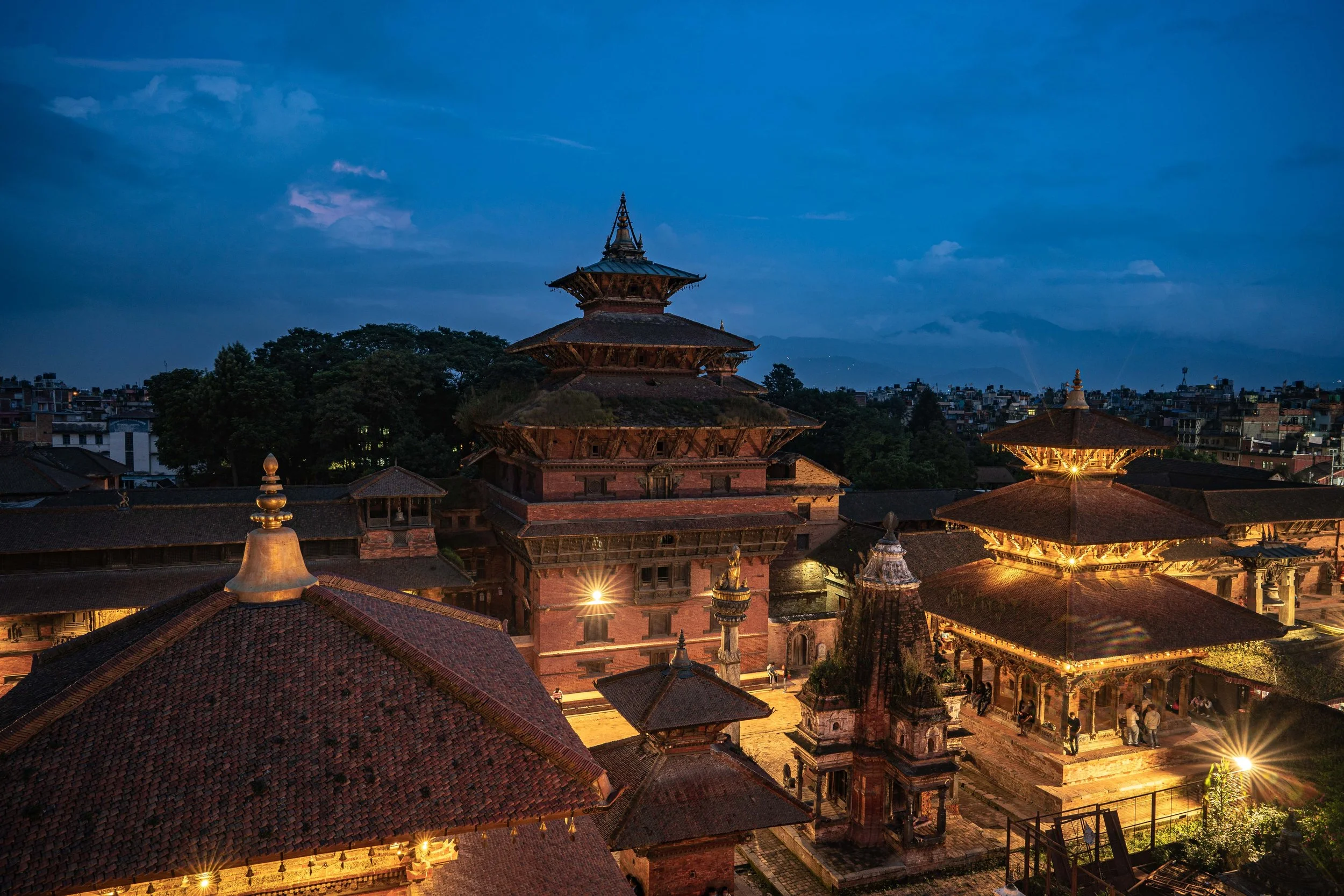
This morning we head south into Patan; the ancient city of artisans. The moment you enter Durbar Square, you’re surrounded by intricate woodwork, metalwork, stone carvings, and temples that have watched centuries of history unfold.
You’ll meet with traditional craftspeople and cultural experts who will share the stories behind their work: lost-wax metal casting, hand-carved windows, sacred geometry, and the deep symbolism embedded in the city’s architecture. It’s an opportunity to learn from the guardians of Nepal’s heritage; people who carry generational knowledge in their hands.
In the late afternoon, we’ll embark on a hands-on cookery class. Here, you’ll learn to prepare classic Nepali dishes under the guidance of local chefs, discovering the aromas, spices, and techniques that make Nepali cuisine so unique. By the end of the class, you’ll enjoy the meal you’ve prepared, rounding off a day rich in culture and flavour.
Day 5 (B)
Pokhara, Phewa Lake & the Peace Pagoda
This morning will see us head to Pokhara on a short early morning flight. Once settled in to our hotel we will take a boat across Phewa Lake and slowly and steadily make our way up hill to the Peace Pagoda. If the weather is clear we will be afforded the most magnificent views Phewa Lake and the Annapurana range spread out before us. We will then head back by bus to the hotel, and the rest of the day will be yours to explore as you wish.
The lakeside city of Pokhara is the gateway to the Annapurnas and often the start and end point for treks in this region. Lakeside is the tourist area, located on the banks of Phewa Lake, with, on a clear day, amazing views of the Annapurna Massif, the Peace Pagoda that looks down over the city and of course, the lake itself. Pokhara has a wonderful laid-back vibe and offers a host of different adventure activities, such as paragliding, rafting, white water kayaking, zip lining and stand-up paddle boarding. For those not looking for an adrenaline fix there are plenty of other options such as yoga, massage, museums, temples, shopping, boating on the lake or taking a gentle stroll along the banks of the lake itself. Lakeside is also a mecca for foodies with cuisine from around the world available at its many cafes, restaurants, bars and clubs.
Day 6 (B)
Cable car to Sarangkot for sunrise, women’s development project & Jangchub Choeling Monastery
This morning we will be up before the birds to catch the Annapurna Cable Car to Sarangkot to witness the sunrise behind the Annapurna Massif. The 10-minute ride takes you up above the clouds hovering over Phewa Lake. From the arrival point there is a short uphill walk to the view point at about 1,600m. Once this natural spectacle is over, we will head back down the same way, and be back at our hotel in time for a well-deserved breakfast.
This morning we will also visit a women’s skills development project, where we hear the stories of the ladies that this project has uplifted and provided a vital source of personal income too over the last 40 years. We will also have an opportunity to see just how their fairtrade products are made from start to finish.
After lunch we will head north from Lakeside to visit the Jangchub Choeling Monastery. Here we will meet some of the monks, learn a little about life following the teachings of Buddha and also why Nepal is home to so many Tibetan refugees.
Day 7 (B L D)
Pokhara to Ale Gaun, Village Homestay (c.2.5 hour drive)
Today we leave the city behind and drive for roughly two and half hours into the countryside. The landscape shifts from lakeside calm to terraced fields, small villages, and forested hills.
We arrive at our homestays; warm, family-run homes where hospitality is personal, meals are cooked from the heart, and the pace slows to village time. Expect a grounded, peaceful evening.
Day 8 (B L D)
Day in the village
A full day immersed in rural life. Depending on the time of year, you might join for seasonal farm work, walk to neighbouring hamlets, help prepare meals, learn about local customs, be on homework duty, or sit with elders who’ll share stories about the land and community.
It’s a gentle but deeply meaningful day; simple, human, and rooted in connection.
Day 9 (B)
Transport back to Pokhara from the village & fly to Kathmandu - free time
We say goodbye to our homestay families after breakfast and drive back to Pokhara. From there, we take a short afternoon flight to Kathmandu.
Once settled back at the hotel, you’ll have free time for shopping, café hopping or simply unwinding.
Day 10 (B)
Departure Day
Transfer to Tribhuvan International Airport for your onward journey.
Tour cost: $2,795 twin share (prices subject to change)
Tour includes:
Pre-trip advice and briefing
Airport transfers for international & domestic flights
Domestic flight ticket Kathmandu - Pokhara - Kathmandu
All in country transportation in private vehicles
5 nights B&B hotel accommodation in KTM at Hotel Nomad or similar
2 nights B&B hotel accommodation in Pokhara at Hotel Karuna or similar
2 nights full board accommodation in a village homestay
Meals as outlined in the intinerary B:9, L:3, D:4
Guided tours: Boudhanath Stupa, Pashupatinath Temple, Bhaktapur & Patan
Tour in Pokhara: boating across Fewa lake, Peace Stupa, Sarangkot cable car, women’s development project & Jangchub Choeling Monastery
Cooking Class
Necessary permits and entrance fees
Insurance for our staff
Group medical kit
Government taxes
Tour does not include:
International flights to and from Kathmandu
Visas for Nepal (available on arrival)
Personal travel/medical insurance
Meals unless specified in the itinerary
Personal expenses to include, but not limited to beverages, alcoholic drinks, gifts, laundry etc.
Sightseeing unless specified in the itinerary
Excess luggage fee for domestic flights
Tips
Charges incurred as a result of delays beyond the control of the operator